
From TrackBee to Triple Whale and back: Why data quality made Scandivv return to TrackBee
Scandivv scaled fast on social, but a temporary switch in their server-side tracking setup revealed how sensitive performance really is to data quality. This case study shows why Scandivv moved from TrackBee to Triple Whale and back again, and how restoring accurate, reliable conversion data helped stabilize and improve advertising performance across Meta and other platforms.


As brands scale, you depend more and more on the quality of the data you feed into the algorithm.


Improved overall
Improved overall
Performance recovered
TL;DR
Scandivv briefly switched its server-side tracking setup away from TrackBee, which led to a noticeable drop in data quality (EMQ) and Meta performance. After switching back to TrackBee, conversion match quality improved, performance stabilized, and ad algorithms once again received reliable signals to optimize on. This case shows how directly data quality impacts advertising results at scale.
Scandivv
Scandivv is a fast-growing DTC jewelry brand built on the power of social platforms. Founded by Robin de Bree, the brand started from organic influencer demand and quickly evolved into a full-scale Shopify business.
What began as followers asking where her jewelry came from, turned into a brand that scaled rapidly across Instagram and TikTok. Today, Scandivv reaches a global audience, with a strong presence in the US, alongside Europe and the UK.
As Scandivv explains, social algorithms played a major role early on:
“It really came from TikTok. Somehow we ended up on the ‘For You’ page in an early stage, and from there it just took off.”
With growth being driven almost entirely by paid and organic social, Scandivv’s success depends heavily on how well advertising platforms can understand and optimize for real customer behavior.
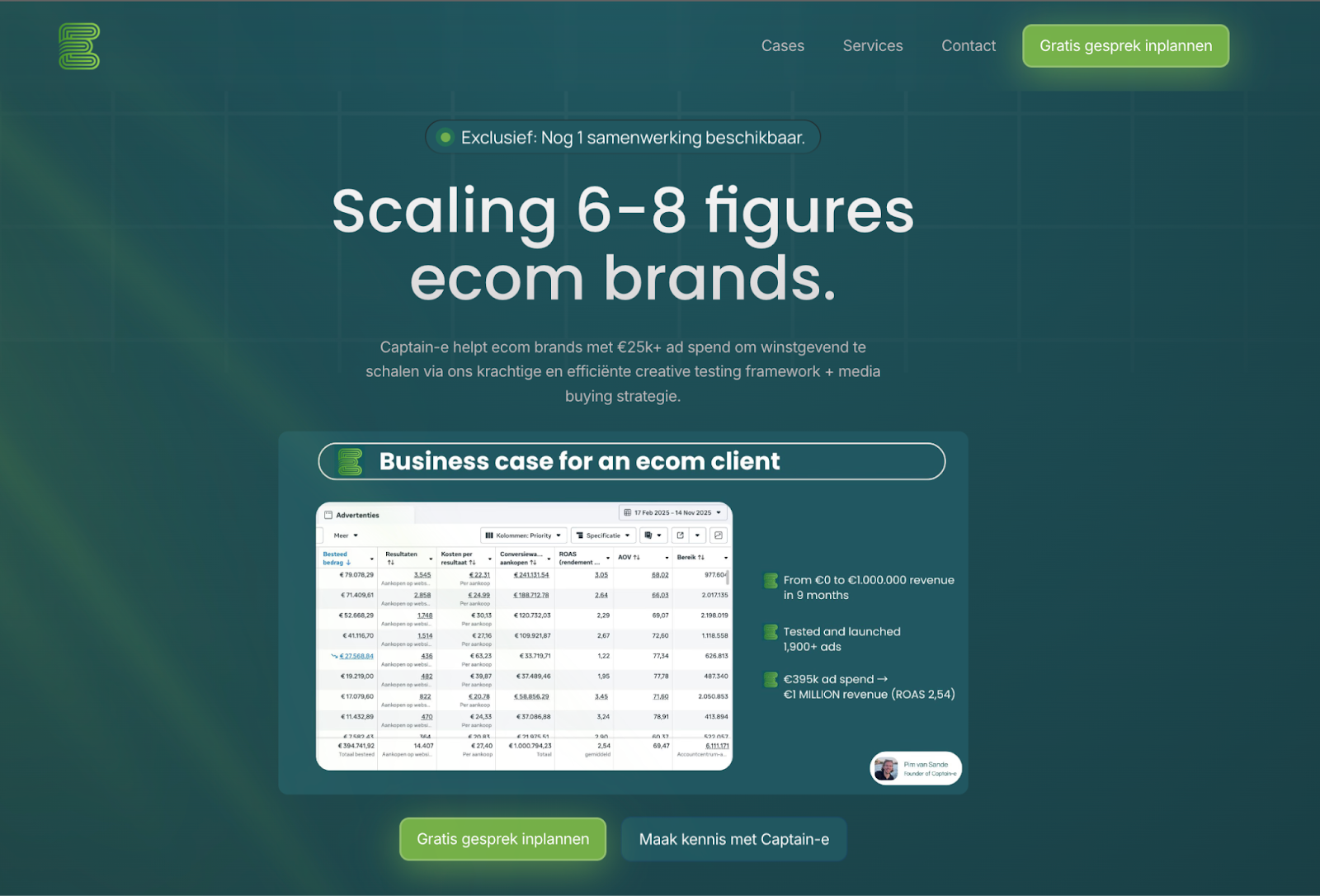
Captain-e
Captain-e is a performance-focused media buying partner specializing in scaling 6–8 figure Shopify brands. With a smart media buying strategy and a consistent creative system, Captain-e rapidly and profitably scales e-commerce brands internationally. Led by Pim, who previously worked for Meta, the agency operates with a strong algorithm-first mindset.
Rather than relying on heavy manual optimizations, Captain-e focuses on feeding advertising platforms with clean, reliable data, allowing algorithms to do what they’re designed to do best.
"As brands scale, you depend more and more on the quality of the data you feed into the algorithm.”


Scaling on Meta meant improving the data foundation
From early 2025, Scandivv and Captain-e worked closely together on Meta advertising. Initially, their campaigns were running on standard client-side tracking through native platform integrations.
As performance matured, both teams agreed it was time to improve tracking quality. The goal was to create a stronger data foundation that could support further scaling.
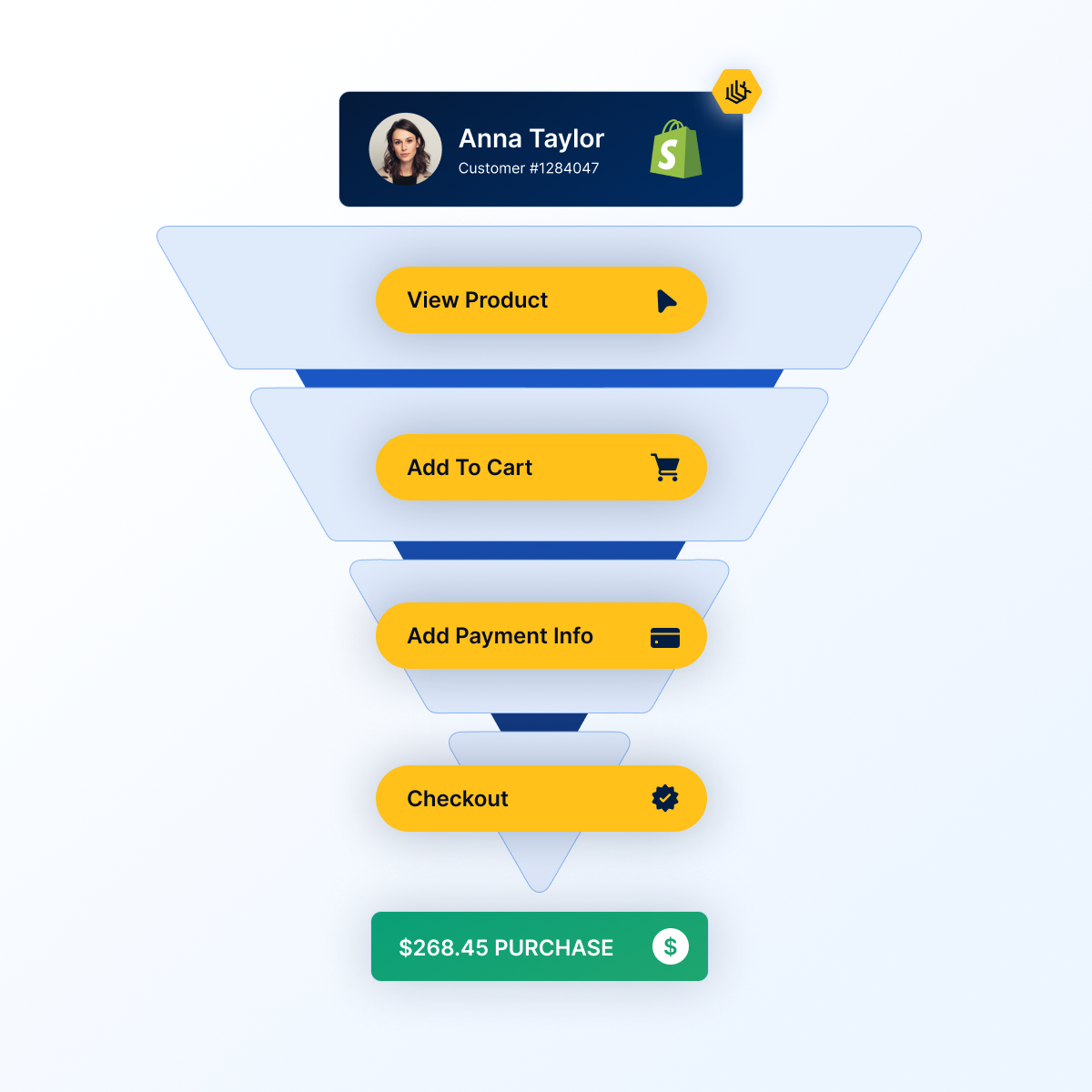
TrackBee was introduced as their server-side tracking solution and implemented across Scandivv’s Shopify setup. From that point on, TrackBee handled the server-side delivery and enrichment of key conversion events, such as Add to Cart, Checkout and Purchase, that were sent back to Meta for optimization.
Later on, curiosity led the team to explore an alternative setup alongside their existing tools - specifically Triple Whale.

Broader insights came with a shift in data quality
Scandivv temporarily switched away from TrackBee’s server-side tracking setup to test Triple Whale. The motivation wasn’t dissatisfaction with TrackBee, but exploration.
Triple Whale offered additional functionality that added extra layers around business insights, such as profit visibility, channel-level overviews, and survey-based context.
Those capabilities were part of the reason for the test, but they were not the core problem TrackBee was originally solving. TrackBee’s focus has always been deliberately narrow: ensuring the highest possible quality of conversion data is sent into advertising platforms.
The switch itself was primarily driven by a desire for broader dashboarding and business insights. As part of that test, Triple Whale also took over responsibility for the server-side tracking layer.
Once TripleWhale became responsible for that layer, changes started to appear.
- First, the Event Match Quality (EMQ) scores inside Meta began to decline after using TripleWhale.
- Shortly after, overall performance entered a period of lower ROAS.
As Pim explains:
"The first thing I noticed after switching to Triple Whale was the negative change in the EMQ scores. At the same time, we also had a period where ROAS dropped, which hadn’t really happened before.”
Both teams are careful not to claim direct causation. Seasonal factors, including Black Friday, were also in play. Still, when reviewing all variables, data quality stood out as the only measurable change that aligned with the performance dip.
That uncertainty became the reason to test the hypothesis: let’s go back to TrackBee!

Restoring data quality clarified the impact on performance
Scandivv decided to re-enable TrackBee as their server-side tracking solution, but deliberately approached it as a controlled test rather than an immediate full switch.
They ran TrackBee alongside Triple Whale for a two-week demo period, allowing both setups to coexist. This made it possible to compare data quality signals without disrupting the broader analytics and dashboarding workflows already in place.
In practice, the team didn’t need the full two weeks. “We thought: let’s go back to TrackBee and see what happens,” Pim explains.
After roughly one week, the differences in data quality, particularly visible through the EMQ scores, were already clear enough to draw conclusions. Based on those early signals, Scandivv decided to fully return to TrackBee for their server-side tracking layer.
After switching back, both data quality indicators and performance trends started to recover.
EMQ score improvements: Triple Whale vs TrackBee
The clearest and most objective change was visible in Meta’s Event Match Quality scores.
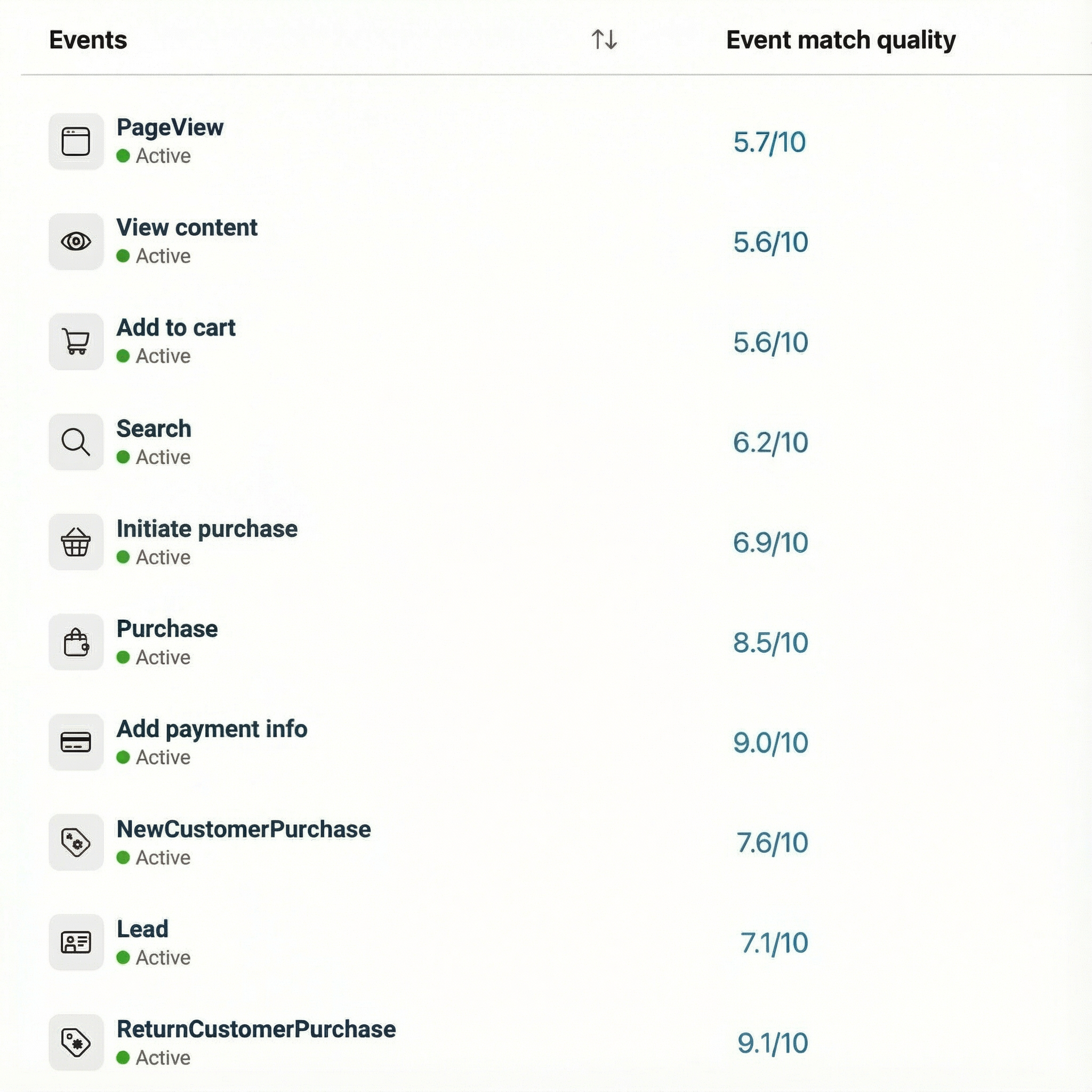
During the period where Triple Whale handled server-side tracking:
- PageView EMQ scores were consistently in the mid-5 range
- ViewContent and Add to Cart events averaged around 5.6–5.7 / 10
- Initiate Checkout reached roughly 6.9 / 10
- Purchase events sat around 8.5 / 10
These scores indicate that a significant portion of events could not be confidently matched to real users, limiting the quality of signals Meta could use for optimization.
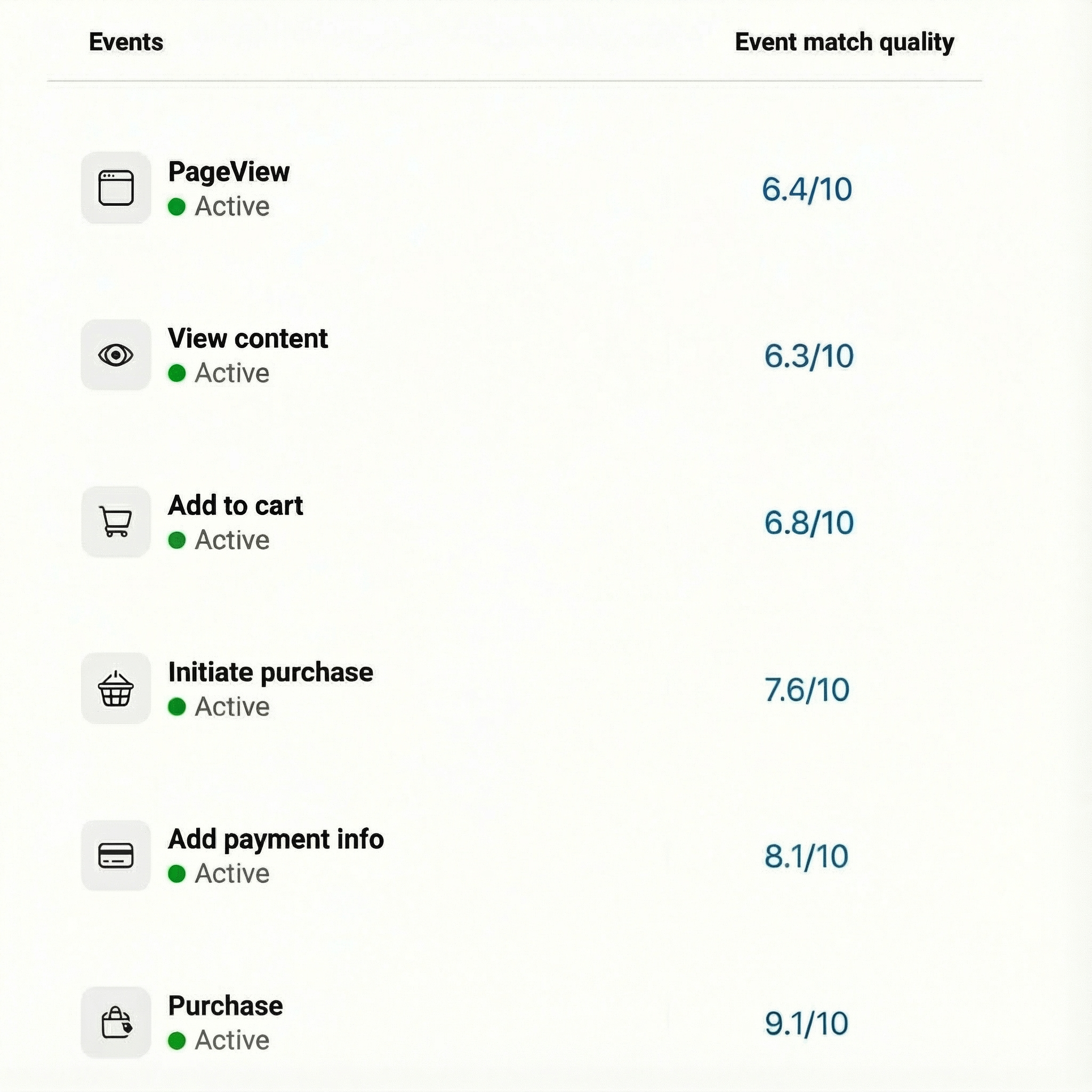
After TrackBee was reactivated:
- PageView EMQ improved into the 6.4 / 10 range
- ViewContent increased to approximately 6.3 / 10
- Add to Cart rose to around 6.8 / 10
- Initiate Checkout improved further to 7.6 / 10
- Purchase EMQ climbed to roughly 9.1 / 10
The most notable gains were visible on deeper-funnel events, where accurate matching matters most. These improvements indicate more complete and confident event data being sent back to Meta.
In practical terms, Meta’s algorithm had a clearer picture of who converted, not just that a conversion happened.
Performance trends
While ROAS is influenced by many variables, both Scandivv and Captain-e observed that performance stabilized and improved again within a week after returning to Trackbee.
The team deliberately avoids hard percentage claims here. The result is explained as a directional outcome supported by improved data quality.
"After we switched back to TrackBee, we did see things start to pick up again.”
Agency experience
From Captain-e’s perspective, Trackbee functions as a reliable, standardized data layer across clients. Rather than adding complexity, it brings consistency to how server-side tracking is implemented and how data is sent back to Meta.
Pim prefers working with one trusted tracking partner to keep setups and optimization logic aligned across accounts:
"I prefer working with a reliable tracking partner. TrackBee is always one of the first tools I think of.”
Because the setup is straightforward and communication is direct, Captain-e spends less time questioning data quality, and more time focusing on campaign strategy, creative testing, and scaling performance with confidence.
Conclusion & outlook
This case highlights a lesson many fast-growing Shopify brands eventually learn: data quality isn’t abstract, it directly affects performance.
When the quality of server-side tracking signals declined, EMQ scores dropped across key events and performance followed. When TrackBee restored accurate, enriched server-side data, EMQ scores increased again, especially on purchase-related events, and performance stabilized.
TrackBee’s role for Scandivv is not about dashboards or reporting layers. It’s about:
- Reliable server-side tracking
- High quality session enrichment with persistent shopper profiles
- Feeding all connected advertising algorithms with the same accurate & high quality data
Looking ahead, Scandivv plans to further expand across platforms, including TikTok and Pinterest. As more channels come into play, maintaining consistent, high-quality data across the entire stack becomes even more important.
This case doesn’t claim that better data guarantees better results.
It shows something more realistic and more valuable:
You don’t always notice good data, but you definitely notice when it’s gone.
With TrackBee, Scandivv & Captain-e stabilized & improved their tracking results.
Improved overall
Improved overall

Performance recovered
.webp)
.webp)
%20(1536%20x%201048%20px)%20(1536%20x%201536%20px).png)