Meta · purchase EMQ
9.1/10
Purchase event match quality climbed to roughly 9.1 after returning to TrackBee, up from around 8.5 during the Triple Whale period.

Scandivv scaled fast on social, then briefly switched its server-side tracking to Triple Whale. Meta event match quality slipped and performance softened. When they returned to TrackBee, the conversion data and the performance came back.

Scandivv, a fast-growing DTC jewelry brand, ran its Meta server-side tracking on TrackBee, briefly moved that layer to Triple Whale, then moved it back. During the Triple Whale period, Meta's Event Match Quality scores fell across the funnel and ROAS softened. Within a week of returning to TrackBee, purchase EMQ recovered to 9.1 out of 10 and performance stabilized. The pattern was hard to miss: the quality of the conversion data you send to Meta shapes how well its algorithm can optimize.
Scandivv is a fast-growing DTC jewelry brand founded by Robin de Bree. It started from organic influencer demand on Instagram and TikTok and grew into a full Shopify business that now reaches a global audience, with a strong presence in the US alongside Europe and the UK. With growth driven almost entirely by paid and organic social, Scandivv's success depends on how well ad platforms can understand and optimize for real customer behavior.
From early 2025, Scandivv worked closely with Captain-e, a media buying agency that scales 6 to 8 figure Shopify brands with an algorithm-first approach. Their campaigns started on standard client-side tracking through native platform integrations. As performance matured, both teams agreed it was time to improve tracking quality and build a stronger data foundation for further scaling.
"As brands scale, you depend more and more on the quality of the data you feed into the algorithm."


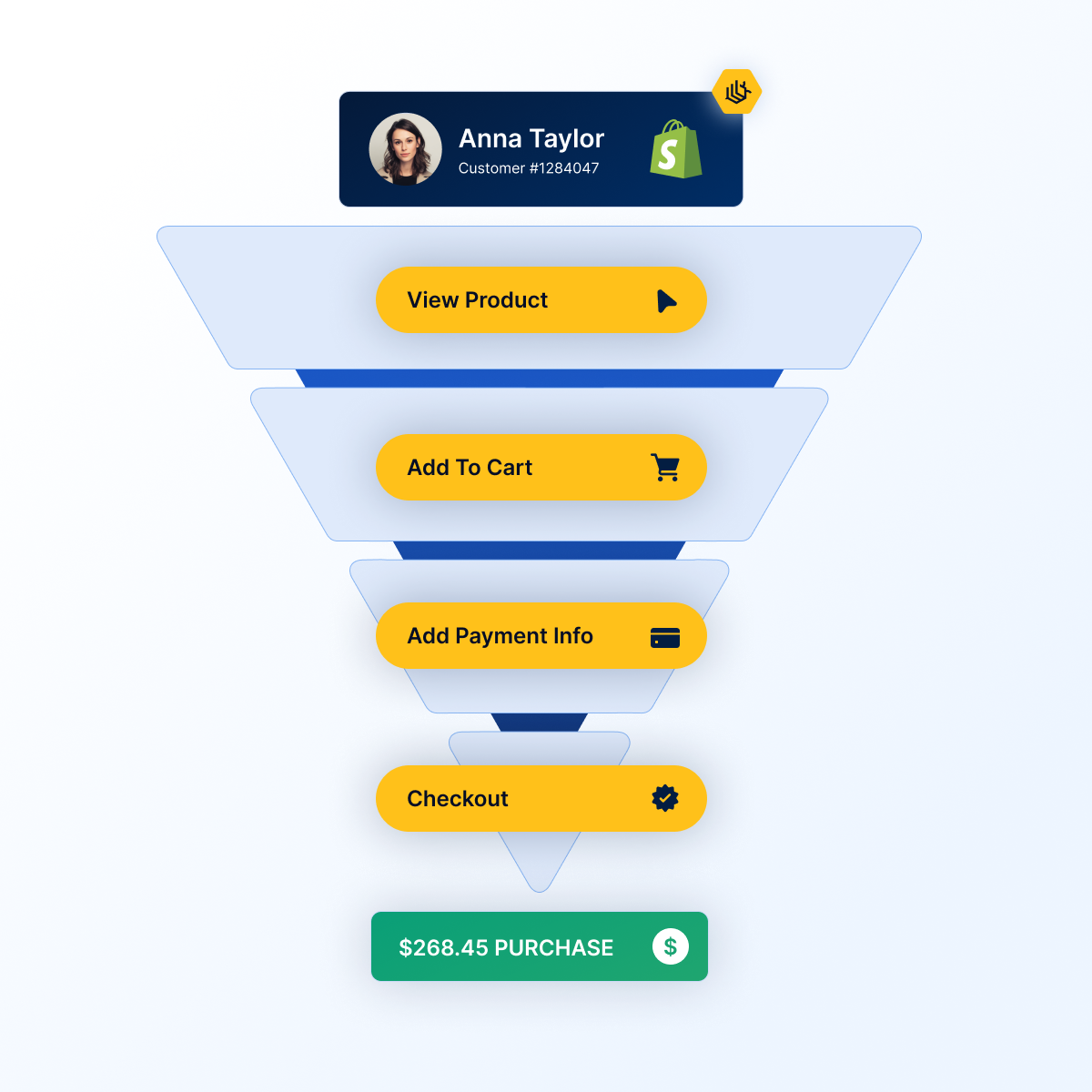
TrackBee was introduced as their server-side tracking solution and implemented across Scandivv's Shopify setup. From that point on, TrackBee captured conversion events server-side and enriched them with first-party data, handling the delivery of key events like Add to Cart, Checkout, and Purchase back to Meta through the Conversions API. Later, curiosity led the team to explore an alternative setup alongside their existing tools, specifically Triple Whale.
Scandivv temporarily switched away from TrackBee's server-side tracking to test Triple Whale. The motivation wasn't dissatisfaction, it was exploration. Triple Whale offered extra layers around business insights, like profit visibility, channel-level overviews, and survey-based context. Those capabilities weren't the problem TrackBee was solving. TrackBee's focus has always been deliberately narrow: sending the highest possible quality of conversion data into advertising platforms.
As part of the test, Triple Whale also took over responsibility for the server-side tracking layer. Once it did, changes started to appear. The Event Match Quality (EMQ) scores inside Meta began to decline. EMQ is the 0 to 10 rating Meta gives to how well each conversion event can be matched to a real person, and shortly after those scores slipped, overall performance entered a period of lower ROAS.
"The first thing I noticed after switching to Triple Whale was the negative change in the EMQ scores. At the same time, we also had a period where ROAS dropped, which hadn't really happened before."
Both teams are careful not to claim direct causation. Seasonal factors, including Black Friday, were also in play. Still, when reviewing all the variables, data quality stood out as the only measurable change that aligned with the performance dip. That uncertainty became the reason to test a clear hypothesis: go back to TrackBee and see what happens.
Scandivv re-enabled TrackBee as a controlled test, running it alongside Triple Whale. The EMQ signals were clear within a week.
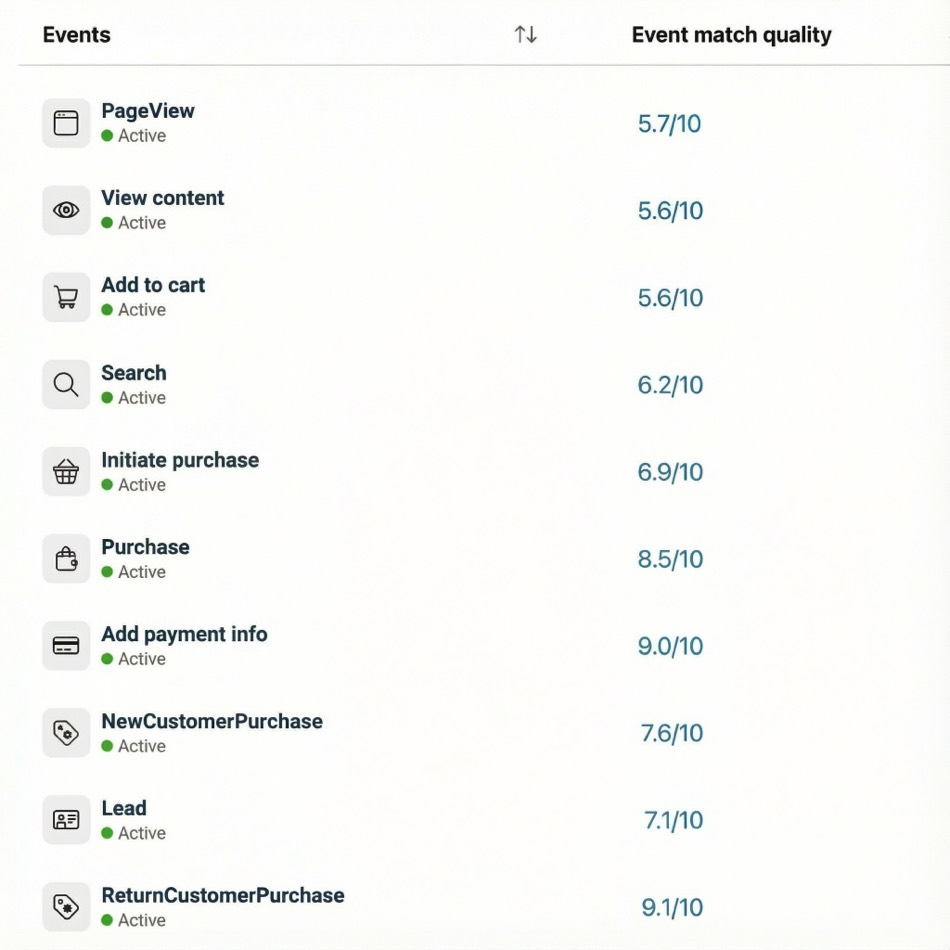
Purchase event match quality climbed to roughly 9.1 after returning to TrackBee, up from around 8.5 during the Triple Whale period.
PageView EMQ improved into the 6.4 range, up from the mid-5s, with gains across every event in the funnel.
The team planned a two-week demo but didn't need it. After about a week the data quality difference was clear enough to commit.
The clearest and most objective change was visible in Meta's Event Match Quality scores. During the period where Triple Whale handled server-side tracking, PageView scores sat in the mid-5 range, ViewContent and Add to Cart averaged around 5.6 to 5.7, Initiate Checkout reached roughly 6.9, and Purchase sat around 8.5 out of 10. Those scores mean a significant share of events could not be confidently matched to real users, limiting the signals Meta could optimize on.
After TrackBee was reactivated, PageView improved into the 6.4 range, ViewContent rose to about 6.3, Add to Cart to around 6.8, Initiate Checkout to 7.6, and Purchase climbed to roughly 9.1. The biggest gains were on deeper-funnel events, where accurate matching matters most. In practical terms, Meta's algorithm could tell who converted, instead of only knowing that a conversion had happened.

While ROAS is influenced by many variables, both Scandivv and Captain-e observed that performance stabilized and improved again within a week of returning to TrackBee. The team deliberately avoids hard percentage claims here and describes it as a directional outcome supported by improved data quality.
"After we switched back to TrackBee, we did see things start to pick up again."
From Captain-e's perspective, TrackBee works as a reliable, standardized data layer across clients. Rather than adding complexity, it brings consistency to how server-side tracking is implemented and how data is sent back to Meta. Because the setup is straightforward and communication is direct, Captain-e spends less time questioning data quality and more time on campaign strategy, creative testing, and scaling with confidence.
This case highlights a lesson many fast-growing Shopify brands eventually learn: data quality isn't abstract, it directly affects performance. When the quality of server-side signals declined, EMQ scores dropped and performance followed. When TrackBee restored accurate, enriched server-side data, scores recovered and performance stabilized. Looking ahead, Scandivv plans to expand further across platforms, including TikTok and Pinterest, where maintaining consistent, high-quality data across the whole stack becomes even more important.
"I prefer working with a reliable tracking partner. TrackBee is always one of the first tools I think of."
Event Match Quality is the 0 to 10 score Meta gives to how well your conversion events match real people. Higher scores mean Meta can attribute and optimize more accurately. TrackBee lifts EMQ by capturing events server-side and enriching them with first-party data before sending them to Meta.
When the server-side tracking layer changed hands, fewer events could be confidently matched to real users, so Meta's EMQ scores fell across the funnel. Once TrackBee handled the server-side data again, purchase EMQ recovered to 9.1 out of 10 within a week.
About a week. The team planned a two-week test, but the difference in EMQ was clear enough to commit after roughly seven days.
TrackBee captures conversion events server-side and enriches them with first-party data, then sends clean, well-matched signals to Meta, Google, TikTok, Pinterest, GA4 & Klaviyo. Browser pixels miss around 30 to 60% of conversions, so server-side tracking recovers much of that signal and lets ad platforms optimize on accurate data. See how it compares in our TrackBee vs Triple Whale breakdown.
Install TrackBee in five minutes and connect Meta. Capture conversion events server-side, enrich them with first-party data, and watch your event match quality improve.