Klaviyo Revenue Benchmark: What Percentage of Revenue Should Klaviyo Drive?

June 27, 2026
Frank de Vos
Klaviyo revenue calculator showing projected lift
Latest
Klaviyo

Klaviyo Revenue Benchmark: What Percentage of Revenue Should Klaviyo Drive?

Klaviyo revenue calculator showing projected lift

Short answer:

For most Shopify stores, Klaviyo should drive 25-40% of total revenue once your core flows and campaigns are live, and the bulk of that comes from just three automated flows: browse abandonment, abandoned cart, and abandoned checkout. If you are below 25%, the cause is usually not weak emails. It is that those three flows never receive most of their triggers, because browser pixels miss 30-60% of conversions before Klaviyo can act on them.

You open Klaviyo, look at last month's attributed revenue, and you have no real way to tell whether it is good. Is 22% strong for your store? Should it be 35%? Most benchmark articles hand you a single percentage and stop there. This guide does three things instead: it gives you the real ranges by stage, it shows you that almost all of your Klaviyo revenue rides on three specific flows, and it explains why those flows quietly underperform for nearly every store. At the end you can calculate your own gap in about 30 seconds.

What Percentage of Revenue Should Klaviyo Drive?

Klaviyo revenue benchmark by program maturity

For an established Shopify store running the standard flows and a regular campaign calendar, Klaviyo (email and SMS combined) should account for roughly 25-40% of total store revenue. Klaviyo's own 2025 benchmark reporting puts the typical store in the high twenties to mid thirties, and agency benchmark data consistently flags anything below 30-40% as underperforming for a mature program (Flowium, 2025).

Here is how that breaks down by program maturity:

Program stageKlaviyo share of total revenueWhat it usually meansEarly (a few flows live, small list)10-20%Welcome and abandoned cart only, list still buildingGrowing (full flow stack, regular campaigns)20-30%Most stores land here, room to growMature (segmentation, all flows live)30-40%Strong program, disciplined sendingTop tier (optimized flows plus complete data)40-50%+Best-in-class, very little leakage

A couple of things to keep in mind before you compare yourself. These ranges assume email is an active channel sending to a healthy, consent-based list, and they describe Klaviyo's last-click attribution, which is how almost everyone reports email revenue. If you have been running email for a while and you are still below 20%, that is a signal worth investigating. The cause is rarely your subject lines, and the next section explains why.

Almost All of Your Klaviyo Revenue Comes From Three Flows

This is the part most marketers underestimate. Your campaigns keep the list warm, but your automated flows are where the efficient revenue lives. According to Klaviyo's 2025 benchmark report, flows generate around 41% of total email revenue from just 5.3% of sends, with revenue per recipient roughly 18 times higher than campaigns. A small set of automations carries the program.

For a Shopify store, three flows do the heavy lifting, and they all share one trigger: a shopper showed intent and then left.

FlowTriggerWhy it mattersBrowse abandonmentViewed a product, did not add to cartCatches intent earliest, most underusedAbandoned cartAdded to cart, did not check outHigh intent, highest recovery potentialAbandoned checkoutStarted checkout, did not completeClosest to the sale, strongest converter

These three are the engine behind a healthy Klaviyo percentage. Around 70% of carts are abandoned, a figure the Baymard Institute has tracked across dozens of studies (their 2025 aggregate sits at roughly 70.2%). That is the raw material these flows are supposed to recover. So when your Klaviyo number lands below benchmark, the real question is not "are my emails good." It is "are these three flows actually firing for everyone they should." For most stores, the answer is no.

Why Those Three Flows Quietly Underperform

What Klaviyo reports versus what email actually drove

Here is the catch that surprises nearly everyone. A flow can only fire when Klaviyo receives the event and matches it to a known shopper. Klaviyo does both with a JavaScript snippet in the browser, and that snippet fails constantly:

Add it up and browser pixels miss roughly 30-60% of conversions on a typical Shopify store. Meta's own 2025 reporting found that more than half of browser-side conversions now go untracked due to privacy and cookie restrictions (Martech Zone, 2025).

Now connect that back to the three flows. Each missed event is a browse, cart, or checkout abandonment that never enters its flow. The shopper had intent. The flow was built and ready. Klaviyo simply never heard about it. And because there is no "events we missed" counter in Klaviyo, the dashboard stays silent. Your flows look healthy on the recipients they do reach, while the majority of abandoners never get an email at all. That is why the percentage looks like an email problem when it is really a tracking problem upstream of Klaviyo.

How to Fix It: Feed the Three Flows Server-Side

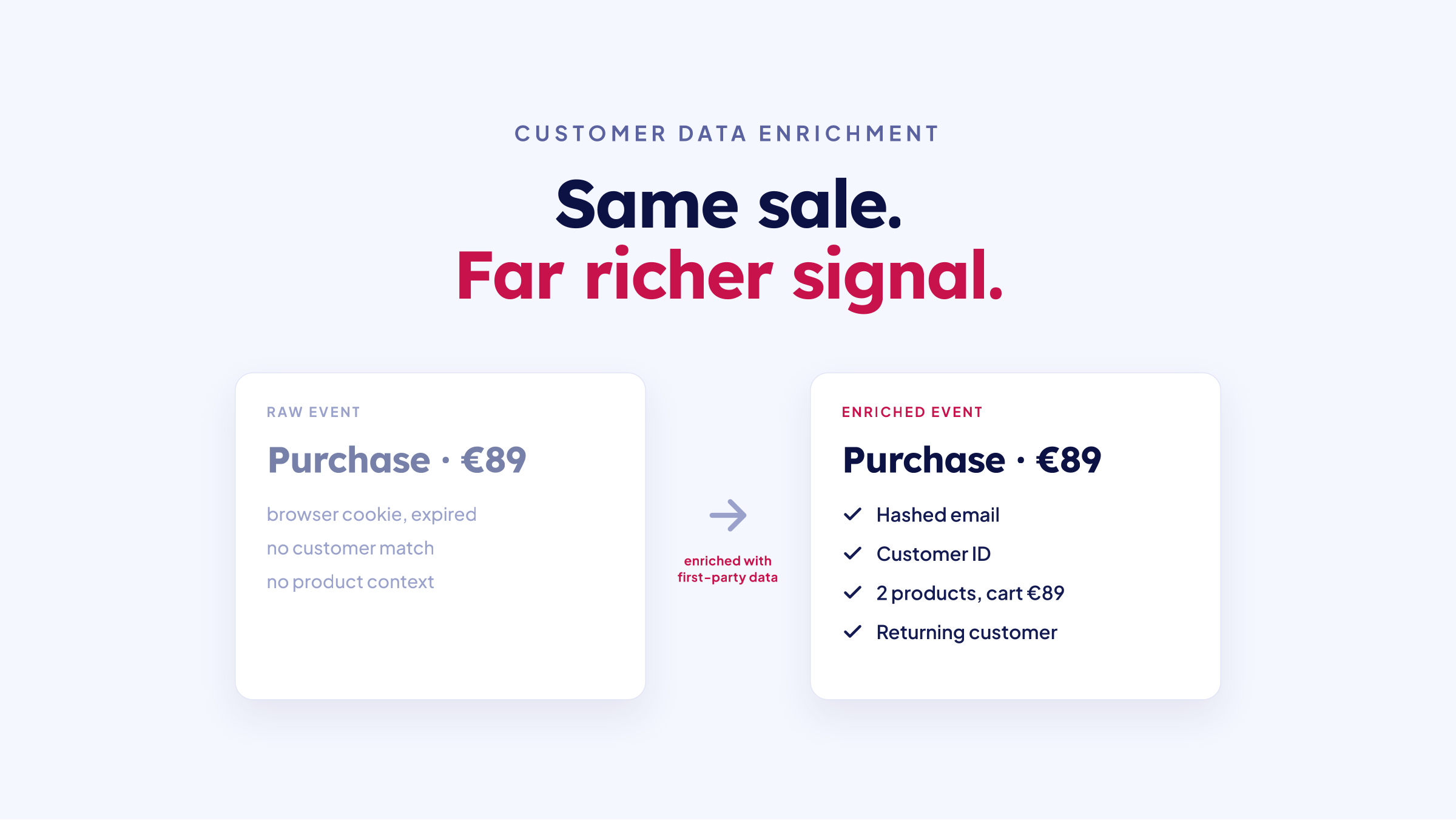
The fix is to stop depending on the browser. Capture browse, cart, and checkout events server-side, enrich them with first party data, and match them to shoppers using persistent profiles that outlast the 24-hour cookie. That way the event fires even when the snippet was blocked, the cookie expired, or the shopper switched devices.

This is exactly what TrackBee does for the three abandonment flows. It runs alongside your existing Klaviyo setup and sends the events Klaviyo's browser tracking missed, so the same flows you already built start triggering for the anonymous and returning shoppers they used to lose. You can see the integration walkthrough here.

The result is more trigger volume into flows that already convert. Stores typically see 2-3x more abandonment flow triggers, and the revenue follows. Zwarte Roes saw a 194% increase in abandonment revenue within 30 days, with no change to the emails themselves. The flow was fine. The triggers were missing.

If you want to go deeper on the two flows with the most upside, we have specific guides for improving your abandoned cart flow and improving your browse abandonment flow.

How to Check Your Own Klaviyo Revenue Percentage

Klaviyo Revenue Calculator preview showing projected lift

You can work this out by hand in two minutes. Pull last month's total store revenue from Shopify, pull your Klaviyo-attributed revenue (email plus SMS) for the same period, and divide the second by the first. That percentage is where you sit against the table above.

The manual number only tells you half the story, though, because it cannot show you the revenue Klaviyo never tracked. To see the full picture, use our Klaviyo Revenue Calculator. It takes three inputs (your monthly store revenue, your current monthly Klaviyo revenue, and whether you already run extra tracking) and estimates how much additional Klaviyo revenue your three flows could recover. For most stores it projects a 25-40% lift, and TrackBee backs it with a guarantee of at least 15% more Klaviyo revenue or your money back.

See your gap in 30 seconds with the Klaviyo Revenue Calculator →

Frequently Asked Questions


For an established store running flows and campaigns, Klaviyo should drive 25-40% of total revenue. Early-stage stores land around 10-20%, and top performers exceed 40%. Klaviyo's 2025 benchmark reporting puts the typical store in the high twenties to mid thirties.


Yes. 30% places you firmly in the healthy range for an established Shopify store and ahead of the typical store. The next gains usually come from recovering abandonment events your tracking misses, not from sending more campaigns.


For Shopify stores, the three abandonment flows do the heavy lifting: abandoned checkout, abandoned cart, and browse abandonment. Klaviyo's 2025 data shows automated flows generate about 41% of email revenue from only 5.3% of sends, far outperforming campaigns per send.


The most common reason is missed events. Klaviyo's browser tracking loses 30-60% of conversions to ad blockers, iOS privacy, and expired cookies, so the three abandonment flows never trigger for most shoppers. The percentage looks like an email problem but is usually a tracking problem.


Compare your Klaviyo revenue percentage to the benchmark, then check whether your flow trigger volume matches your actual abandoner count from Shopify. With cart abandonment near 70% industry-wide, far fewer flow triggers than abandoned carts means your tracking is missing events, not your emails.


Stores typically see 25-40% more Klaviyo revenue after capturing browse, cart, and checkout events server-side, driven by 2-3x more abandonment flow triggers. The gain comes from recovering anonymous and returning shoppers the

See Where Your Store Stands

Knowing the benchmark is step one. Knowing your own number, including the revenue your three flows are not capturing, is what moves the needle. Use the free Klaviyo Revenue Calculator to estimate your gap, then read why Klaviyo misses 60-70% of cart abandoners to understand what is causing it.

In this article
Boost Your Revenue
Track Missing Conversion Data
Lorem Ipsum

Boost Your Revenue

Track & Enrich
Missing Conversion Data

Try for free
Share this:

Short answer:

For most Shopify stores, Klaviyo should drive 25-40% of total revenue once your core flows and campaigns are live, and the bulk of that comes from just three automated flows: browse abandonment, abandoned cart, and abandoned checkout. If you are below 25%, the cause is usually not weak emails. It is that those three flows never receive most of their triggers, because browser pixels miss 30-60% of conversions before Klaviyo can act on them.

You open Klaviyo, look at last month's attributed revenue, and you have no real way to tell whether it is good. Is 22% strong for your store? Should it be 35%? Most benchmark articles hand you a single percentage and stop there. This guide does three things instead: it gives you the real ranges by stage, it shows you that almost all of your Klaviyo revenue rides on three specific flows, and it explains why those flows quietly underperform for nearly every store. At the end you can calculate your own gap in about 30 seconds.

What Percentage of Revenue Should Klaviyo Drive?

Klaviyo revenue benchmark by program maturity

For an established Shopify store running the standard flows and a regular campaign calendar, Klaviyo (email and SMS combined) should account for roughly 25-40% of total store revenue. Klaviyo's own 2025 benchmark reporting puts the typical store in the high twenties to mid thirties, and agency benchmark data consistently flags anything below 30-40% as underperforming for a mature program (Flowium, 2025).

Here is how that breaks down by program maturity:

Program stageKlaviyo share of total revenueWhat it usually meansEarly (a few flows live, small list)10-20%Welcome and abandoned cart only, list still buildingGrowing (full flow stack, regular campaigns)20-30%Most stores land here, room to growMature (segmentation, all flows live)30-40%Strong program, disciplined sendingTop tier (optimized flows plus complete data)40-50%+Best-in-class, very little leakage

A couple of things to keep in mind before you compare yourself. These ranges assume email is an active channel sending to a healthy, consent-based list, and they describe Klaviyo's last-click attribution, which is how almost everyone reports email revenue. If you have been running email for a while and you are still below 20%, that is a signal worth investigating. The cause is rarely your subject lines, and the next section explains why.

Almost All of Your Klaviyo Revenue Comes From Three Flows

This is the part most marketers underestimate. Your campaigns keep the list warm, but your automated flows are where the efficient revenue lives. According to Klaviyo's 2025 benchmark report, flows generate around 41% of total email revenue from just 5.3% of sends, with revenue per recipient roughly 18 times higher than campaigns. A small set of automations carries the program.

For a Shopify store, three flows do the heavy lifting, and they all share one trigger: a shopper showed intent and then left.

FlowTriggerWhy it mattersBrowse abandonmentViewed a product, did not add to cartCatches intent earliest, most underusedAbandoned cartAdded to cart, did not check outHigh intent, highest recovery potentialAbandoned checkoutStarted checkout, did not completeClosest to the sale, strongest converter

These three are the engine behind a healthy Klaviyo percentage. Around 70% of carts are abandoned, a figure the Baymard Institute has tracked across dozens of studies (their 2025 aggregate sits at roughly 70.2%). That is the raw material these flows are supposed to recover. So when your Klaviyo number lands below benchmark, the real question is not "are my emails good." It is "are these three flows actually firing for everyone they should." For most stores, the answer is no.

Why Those Three Flows Quietly Underperform

What Klaviyo reports versus what email actually drove

Here is the catch that surprises nearly everyone. A flow can only fire when Klaviyo receives the event and matches it to a known shopper. Klaviyo does both with a JavaScript snippet in the browser, and that snippet fails constantly:

Add it up and browser pixels miss roughly 30-60% of conversions on a typical Shopify store. Meta's own 2025 reporting found that more than half of browser-side conversions now go untracked due to privacy and cookie restrictions (Martech Zone, 2025).

Now connect that back to the three flows. Each missed event is a browse, cart, or checkout abandonment that never enters its flow. The shopper had intent. The flow was built and ready. Klaviyo simply never heard about it. And because there is no "events we missed" counter in Klaviyo, the dashboard stays silent. Your flows look healthy on the recipients they do reach, while the majority of abandoners never get an email at all. That is why the percentage looks like an email problem when it is really a tracking problem upstream of Klaviyo.

How to Fix It: Feed the Three Flows Server-Side

The fix is to stop depending on the browser. Capture browse, cart, and checkout events server-side, enrich them with first party data, and match them to shoppers using persistent profiles that outlast the 24-hour cookie. That way the event fires even when the snippet was blocked, the cookie expired, or the shopper switched devices.

This is exactly what TrackBee does for the three abandonment flows. It runs alongside your existing Klaviyo setup and sends the events Klaviyo's browser tracking missed, so the same flows you already built start triggering for the anonymous and returning shoppers they used to lose. You can see the integration walkthrough here.

The result is more trigger volume into flows that already convert. Stores typically see 2-3x more abandonment flow triggers, and the revenue follows. Zwarte Roes saw a 194% increase in abandonment revenue within 30 days, with no change to the emails themselves. The flow was fine. The triggers were missing.

If you want to go deeper on the two flows with the most upside, we have specific guides for improving your abandoned cart flow and improving your browse abandonment flow.

How to Check Your Own Klaviyo Revenue Percentage

Klaviyo Revenue Calculator preview showing projected lift

You can work this out by hand in two minutes. Pull last month's total store revenue from Shopify, pull your Klaviyo-attributed revenue (email plus SMS) for the same period, and divide the second by the first. That percentage is where you sit against the table above.

The manual number only tells you half the story, though, because it cannot show you the revenue Klaviyo never tracked. To see the full picture, use our Klaviyo Revenue Calculator. It takes three inputs (your monthly store revenue, your current monthly Klaviyo revenue, and whether you already run extra tracking) and estimates how much additional Klaviyo revenue your three flows could recover. For most stores it projects a 25-40% lift, and TrackBee backs it with a guarantee of at least 15% more Klaviyo revenue or your money back.

See your gap in 30 seconds with the Klaviyo Revenue Calculator →

Frequently Asked Questions


For an established store running flows and campaigns, Klaviyo should drive 25-40% of total revenue. Early-stage stores land around 10-20%, and top performers exceed 40%. Klaviyo's 2025 benchmark reporting puts the typical store in the high twenties to mid thirties.


Yes. 30% places you firmly in the healthy range for an established Shopify store and ahead of the typical store. The next gains usually come from recovering abandonment events your tracking misses, not from sending more campaigns.


For Shopify stores, the three abandonment flows do the heavy lifting: abandoned checkout, abandoned cart, and browse abandonment. Klaviyo's 2025 data shows automated flows generate about 41% of email revenue from only 5.3% of sends, far outperforming campaigns per send.


The most common reason is missed events. Klaviyo's browser tracking loses 30-60% of conversions to ad blockers, iOS privacy, and expired cookies, so the three abandonment flows never trigger for most shoppers. The percentage looks like an email problem but is usually a tracking problem.


Compare your Klaviyo revenue percentage to the benchmark, then check whether your flow trigger volume matches your actual abandoner count from Shopify. With cart abandonment near 70% industry-wide, far fewer flow triggers than abandoned carts means your tracking is missing events, not your emails.


Stores typically see 25-40% more Klaviyo revenue after capturing browse, cart, and checkout events server-side, driven by 2-3x more abandonment flow triggers. The gain comes from recovering anonymous and returning shoppers the

See Where Your Store Stands

Knowing the benchmark is step one. Knowing your own number, including the revenue your three flows are not capturing, is what moves the needle. Use the free Klaviyo Revenue Calculator to estimate your gap, then read why Klaviyo misses 60-70% of cart abandoners to understand what is causing it.

Latest

Discover other Blogs

Explore our collection of informative and engaging blog posts.

TrackBee, official measurement partner for Whop Ads
Frank de Vos, Marketing at TrackBee
Frank de Vos
5
min read
Microsoft Ads cost benchmarks for Shopify brands in 2026
Frank de Vos
Frank de Vos
5
min read
ChatGPT Ads cost benchmarks for Shopify brands in 2026
Frank de Vos
Frank de Vos
5
min read